Budget cuts are familiar to most people involved in schools, but one department in particular has been taking extra hits in recent years.
Kelly Dwight, who has been an intensive skills teacher in the special education department for 11 years, works not just as a teacher, but as a strong dedicated advocate for her students. Although budget cuts strongly impact the special education department, Dwight has learned to get flexible with funding and tried not to allow it to impact student learning.
A core focus of Dwight’s class is their monthly field trips. These outings provide her students with more hands-on experience with everyday tasks such as navigating Portland’s public transit system.
“Field trips are essential for teaching safety and independence,” Dwight explained.
Ideally, Dwight would love to take her students for weekly field trips, but due to a tight budget and transportation conflicts they can only go once a month. Dwight occasionally finds herself reaching into her own pocket to fund these learning experiences. Although the profits from the morning coffee cart help her to stretch the special education department’s budget further, it often still isn’t enough.
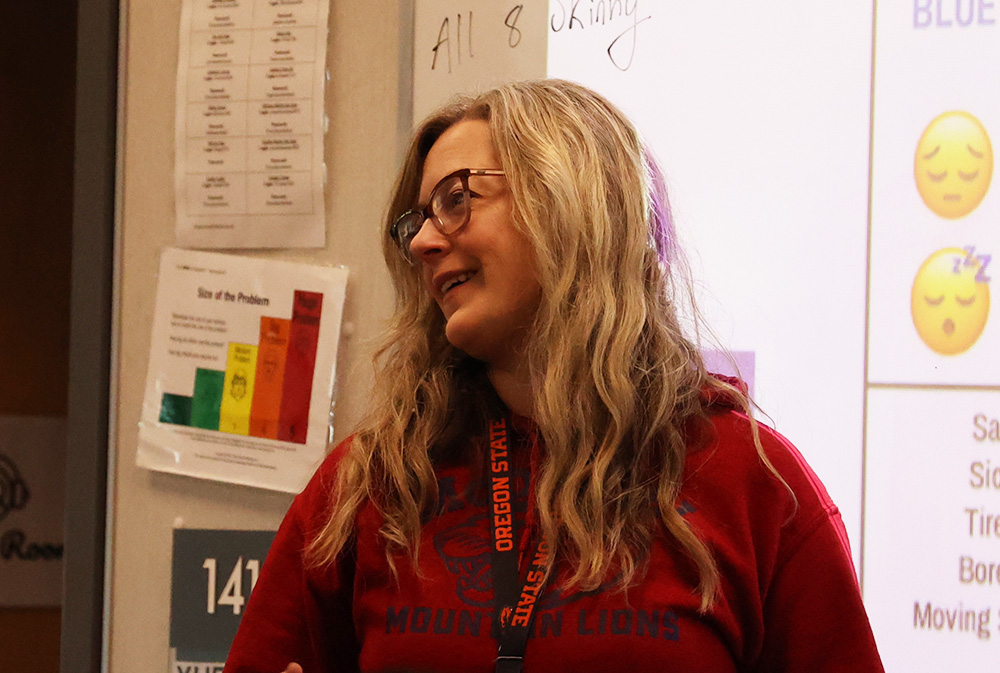
In the mornings Andy Clark, a fellow intensive skills teacher, can often be seen with his students serving coffee near the student store.
“The money we get from the coffee cart serves as almost a scholarship for some students to be able to go on field trips,” Clark said.
Clark also explained how the funds aren’t able to cover every student but still help to aid the costs of field trips. While finances are an issue, transportation also remains a difficult constraint.
“Access to community impacts people differently,” Dwight noted.
Getting a bus could cost up to $500 for her students, so they often resort to public transportation. However, with three students in wheelchairs and only two wheelchair accessible seats on the bus, her students often end up separated, with some not being able to attend due to no available seating. Dwight also often struggles with finding chaperones for these trips due to high costs and lack of availability.
At the end of each school year Dwight feels the impact of budget cuts continuously grow. Each year brings the continuous risk of position cuts especially directed towards support staff. Dwight has observed the cycle of budget cuts and notes that they most often begin with a large increase in case load followed by the most recent hire being released. She noted that the positions experiencing the hardest hits are adaptive P.E., physical therapy and speech pathology. On the topic of lack of support staff, “We really feel that everyday.”
Jerae Bjelland is one of Dwight’s coworkers. Due to Bjelland’s position as a speech language pathologist, they often work closely together.
“One of the primary impacts I’ve noticed this year has been the increased class sizes in our intensive skills classroom,” Bjelland said. “Kelly Dwight currently has 14 students with seven paraeducators in her room but many of her students have high needs and require 1:1 or 2:1 adult support.” Bjelland explained.
She also referenced the PPS website’s identification of a typical intensive skills classroom having 13 students which differs from Dwight’s 14.
Dwight primarily relies on the site DonorsChoose to cover the funding gap, even occasionally receiving donations through major brands. If Dwight needs additional money from the district, she has to submit lengthy paperwork.
Bjelland and Dwight both believe the special education department has been in need of a spotlight for years.
“There’s always pressure, I feel like I’m constantly treading water. I can’t meet everyone’s needs all at once,” Dwight explained.
She plans to keep advocating and continues to get creative as to not let money impact her students.