
“I wanted to manage the largest, most chaotic kitchen in PPS, so when McDaniel–Madison at the time–opened up, I applied immediately,” Chris stated.
That’s the story of how McDaniel was gifted with Chris.
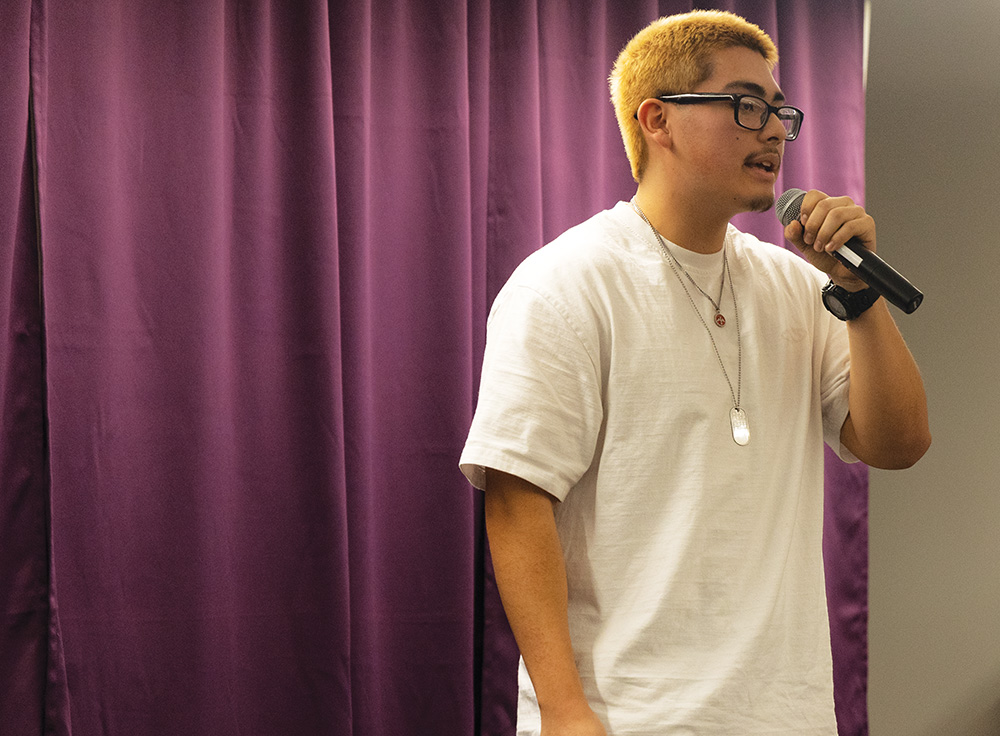
Outside of work, Chris is a roller derby announcer and has a passion for writing. He has been an announcer for the Rose City Rollers for many years. He is a big supporter of many women’s sports, including the Portland Thorns and professional women’s hockey. Chris doesn’t just write as a hobby, he sells them as well.
His job is very routine, where he uses his hands a lot and doesn’t use screens everyday. That makes being able to write a refreshing part of the day. He has all day to imagine and produce the storyline in his head, then when he gets home he’s able to plop on the couch (with preferably his cat) and write for hours.
Kasey O’Rourke, the co-nutrition services assistant, says he is very humble about his books.
“I always tell him I’m going to miss him when he’s a best seller,” O’Rourke said.
The job of cafeteria lead is a big role to fill. The day starts early in the morning at 6:30 a.m. The first task that needs to be done is checking the fridges and freezers to make sure they’re working properly. If the temperature is off, it’s good to catch early to prevent students from getting a foodborne illness.
“I turn on the ovens and start preparing the burrito bar and breakfast, as well as planning what the team needs to prioritize for the day,” Chris said.
The burrito bar takes longer to cook than the pizza and other meals the cafeteria provides. By getting it out early in the morning, Chris and the other kitchen staff members can prioritize other tasks while keeping the bar cooking. Walters then spends the next hour on breakfast.
“The two and a half hours between breakfast service and lunch are a whirlwind of preparation. A lot depends on the menu for the day. Mozzarella breadstick day is relatively easy. Kung pao or teriyaki means stir-frying, then pre-loading 150-200 entrees,” Chris said.
He then goes on to state how important having bodies behind the scenes is: “It’s a team effort to get it done. Lunch service is just chaos.”
They end up serving over 650 lunches a day and a majority in the first 15 minutes.
“We do actually cook food. I know some people think we don’t,” Chris stated.
After lunch, they clean up and get other daily tasks done, such as paperwork.
Something Chris suspects people don’t know about is the reasoning behind why it’s so important to grab a fruit or vegetable during lunch. Wentela stated that part of their job is to make sure that students take a fruit or vegetable with every meal. “He is always there, offering any and every student some nutritious food. Students can always count on Chris providing something to eat.”Erik Wentela, the Nutrition Services Assistant adds.
“Even if it goes in the “No Thank You” or “Share Table” bowl, it’s part of the requirements to offer free school lunch,” Wentela said. “We don’t want to be jerks about it, but a lunch without a fruit or vegetable doesn’t count. And our ability to show that we are providing complete lunches to our students relies on students taking a fruit or vegetable every time.”
According to Chris, they legally can’t get paid for the lunch without it. If they don’t get paid for the lunch then it’s hard to plan and make improvements to the kitchen.
“I knew what to expect going in, but after the redesign, there was new equipment, including a tilt skillet, which has been fun to experiment with,” Chris noted.
A tilt skillet is a huge piece of cooking equipment that can simmer, steam, fry, saute, and grill, all in large batches. That’s extremely helpful when trying to feed so many students.
There’s a lot for Chris to reflect on after his long days, including the social aspects and interactions with students that Chris appreciates.
“Y’all are amazing and often the best part of my day,” he states.