To me, there are two kinds of music. Music that I listen to purely for enjoyment and thinking music. Thinking music does not allow itself to be mindless noise; it demands attention and challenges the listener’s perceived limits. Whenever I need to focus on music itself, I listen to Kisspink and the Boobies.
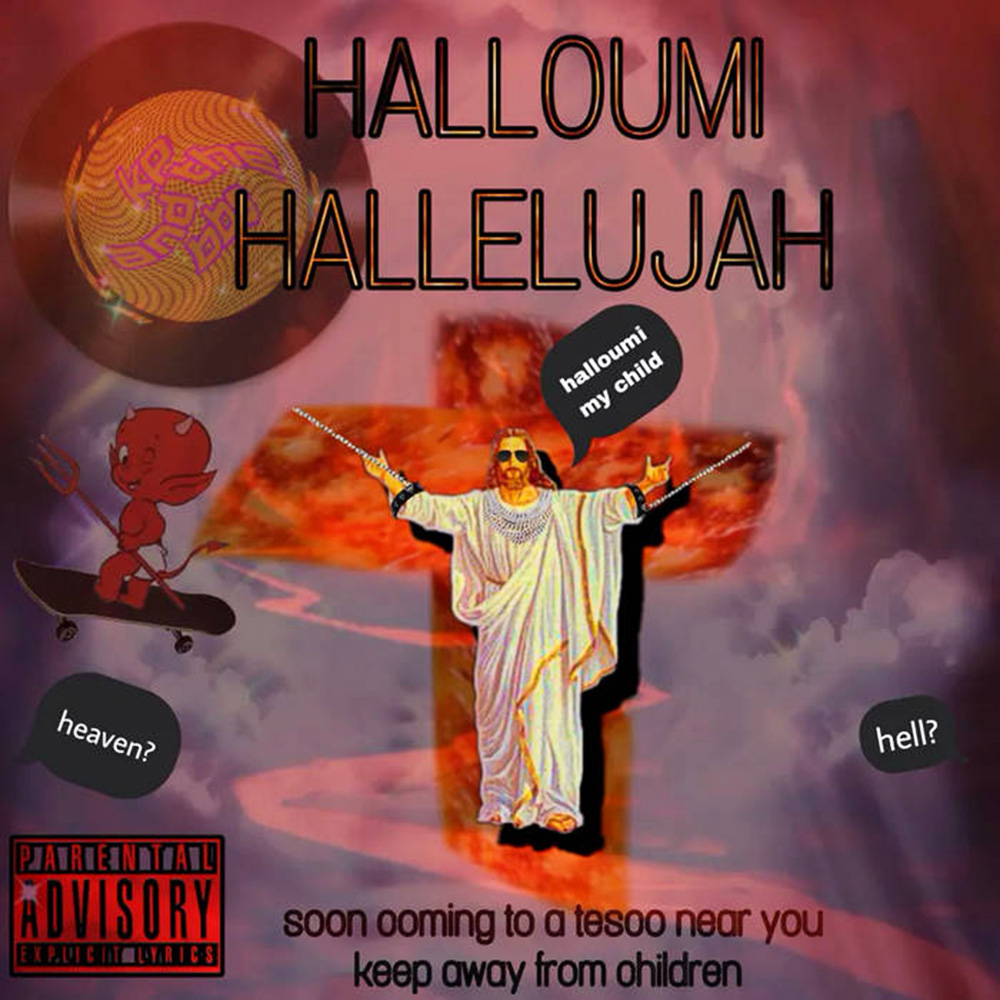
Their recent album Halloumi Hallelujah has given me the most to think about in a long while. The album walks two intertwined paths: one of relatively normal synths and the other a journey of concerning yet groovy tunes. This path is not one that you have to pay close attention to notice, as moments of solace you may find in rhythm will quickly be interrupted by screaming and distortion.
If I were forced to choose a favorite track on the album, I would probably say that it was “The Horned Beast Rises.” There’s an almost orchestral feel to the track, and it reminds me of going to the Oregon Symphony when I was younger. If this song isn’t making me feel as though I’m in the Arlene Schnitzer Concert Hall, then I am certainly in a dark hollow deep within the woods, petrified by fear as a demonic beast rises from Hell itself. This isn’t to take away from “NOT 31”, which simultaneously sounds like a lullaby and sends you off on a train hurtling through a snowstorm.
By far the strangest offering on Halloumi Hallelujah is the final track, “sonja riffs.” It’s always a treat when there are lyrics on a Kisspink and the Boobies song. The dogged insistence that God can only be the singer’s and not anyone else’s is simultaneously concerning and compelling. It really helps flesh out the religious themes present on songs like “The Horned Beast Rises” and “Tammy don’t love god like me [normal 5].”
Another curiosity about Halloumi Hallelujah is that about half of the songs are labeled [normal]. These songs are shorter and simpler than their peers, but they serve as welcome breaks from the cacophony of the others. My favorite of these is “born in the wrong generation (1 b.c blues) [normal 2].” It works as the perfect interlude between “cheese anthem” and “name later.”
Even though the mysteries encased in this album are simply too many to decipher in a single lifetime, I highly recommend it to anyone who is into experimental or alternative music. Any low points the album may have are more than made up for by the depth and texture of the rest. I would deem Halloumi Hallelujah the crown jewel of this band’s catalog if it weren’t for the fact that it implies that musical growth is not inevitable.