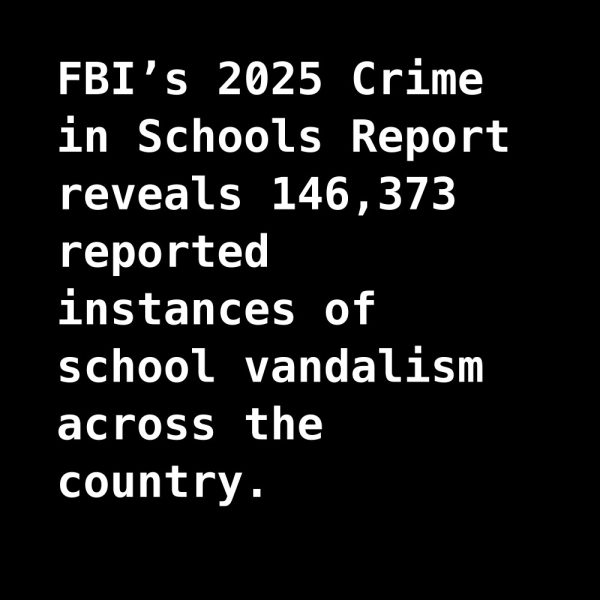
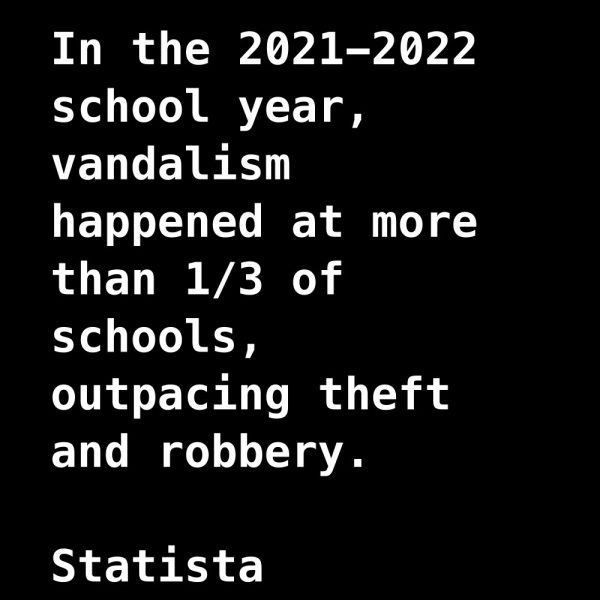
School vandalism–scribbled writing and doodles in bathroom stalls and underneath desks. It is prevalent. One 2022 Statista study found that 35.8% of public schools in the United States report vandalism. At McDaniel, these seemingly innocent acts of creativity hold serious implications beyond their appearance. The impact goes beyond a less comfortable bathroom experience for some students. It negatively influences the school culture, the custodians and the school system as a whole, and must be rerouted to different but equally creative outlets.
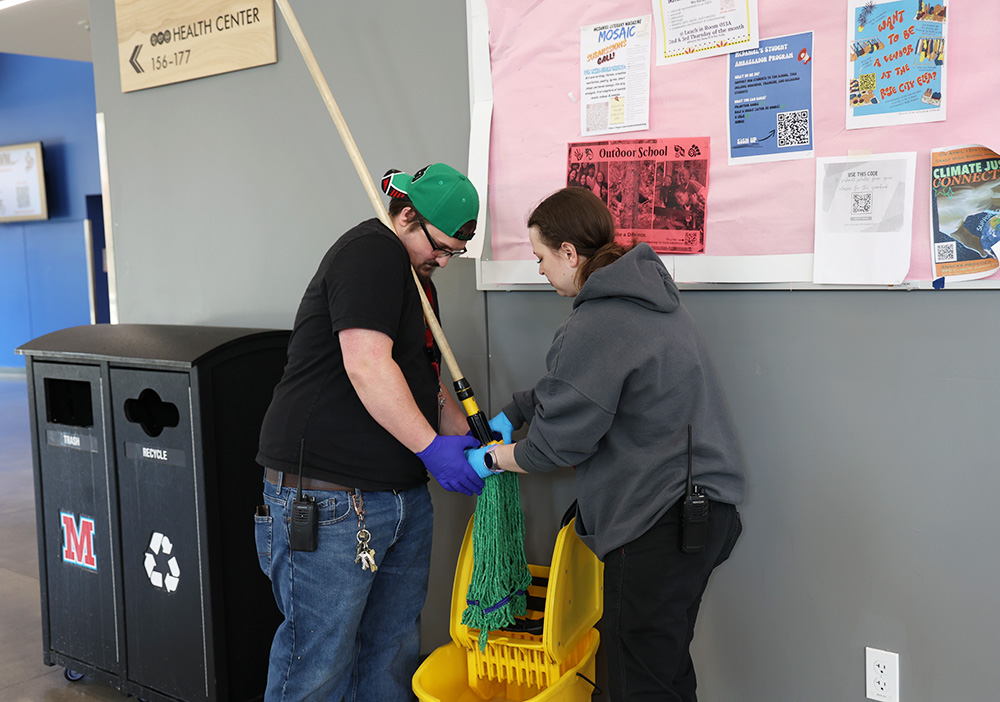
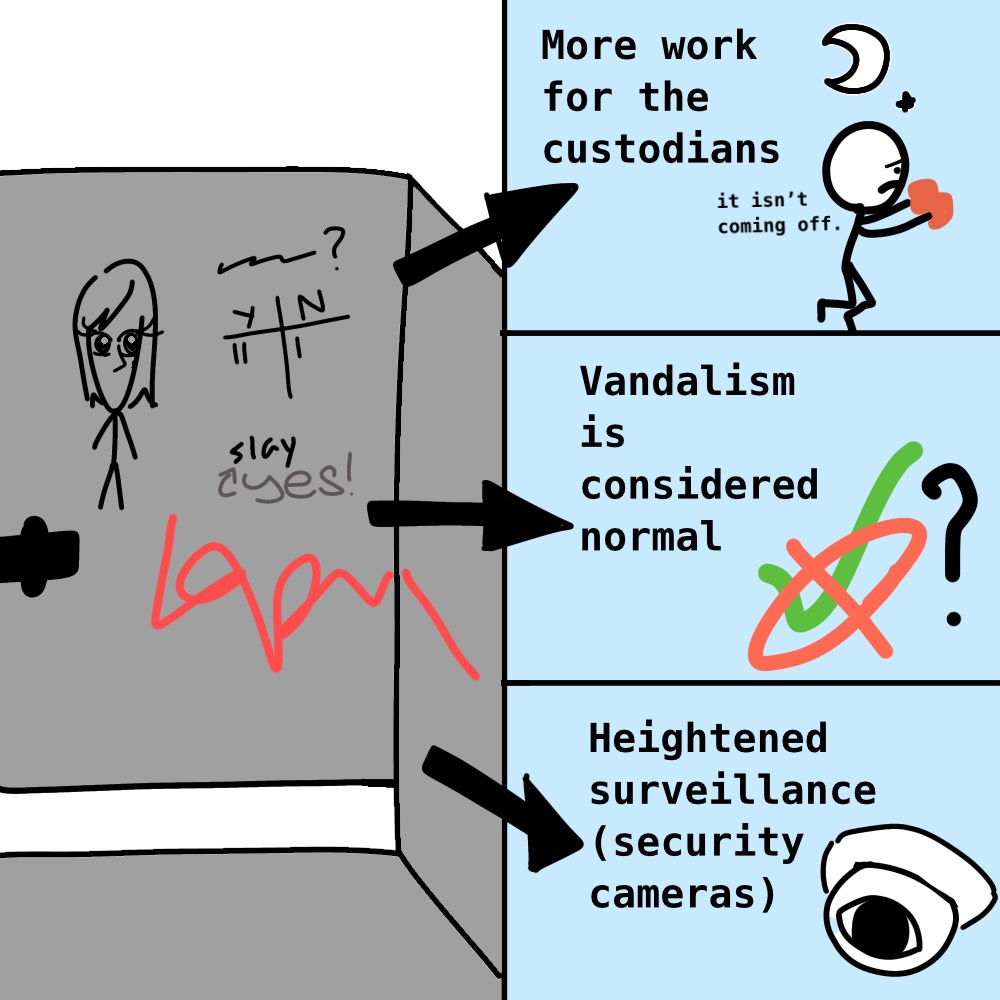
Every artistic masterpiece is one mess that custodians have to clean. Custodian Claudene Stewart says that she’s happy our school has artistic talent but she wishes they could use their talent in a different way, even if they’re advocating for a good cause. Why draw on a surface that will be wiped off anyway? She notes that there are chemicals, especially in marker ink, that are really hard to get off. She is glad that the school has become stricter on students and believes they are trying their best but still thinks that there is work to be done. Perhaps accountability might be the answer–those who draw on public spaces ought to be the ones to clean up after their own mess.
In fact, just last year, the school began implementing cameras around bathrooms to catch students who vandalize and hold them accountable. Additionally, for young people, seeing vandalism around their surroundings creates a perception that vandalism is normal. People aren’t taught from the start of their life that drawing on the walls is perceived negatively. As toddlers, many people drew on the walls within their home. Still, accountability is important, yet continued acts of vandalism perpetuate a miserable system of increased surveillance and punishment. This isn’t the full answer. The creativity of students needs to be redirected.
Examining the contents written and drawn underneath desks and on the walls of stalls, people can notice two main themes. First, a sense of whimsy and creativity stemming from the blissfulness of the process of nature and the increased sharpness of the student mind during class. Second, a series of anonymous communication between students over an expanse of time. It is clear that students long for social interaction and creative outlets.
Senior Casey Coleman, co-founder of McDaniel’s literary magazine, the Mosaic, thinks the same. She believes that school vandalism is living proof that people do want to be creating something but that it isn’t the correct outlet for that creativity because it interrupts our school space. Before she brought back the literary magazine with her former co-editor Sureika Shore, she saw that the school had formal communications outlets like the newspaper program yet it lacked an outlet for general student creativity, a place where the entire school could just come together and share their creations. That’s why she founded the literary magazine to fill that gap. Through the Mosaic, students can share their art, writing, music, and other media. People can submit writing, art, music and short videos to the online website. For writing and art, students can also submit through the Mosaic Instagram account. People are also welcome to talk to the editors of the Mosaic in person if other avenues of submission would be more convenient.
Students draw and write because they seek creative expression. Punishment is not what will not deter the lawless creative desires of students–other forms of creativity are. We must change the system so both students and custodial staff feel heard. Rather than defacing the surfaces of shared school space, students ought to turn to other outlets. These outlets include, but are not limited to, submitting art to the Mosaic, drawing on school notebooks and worksheets instead of the desks, taking an art class here, and journaling. To change the system as a whole, the community ought to promote and participate in alternative forms of expression.