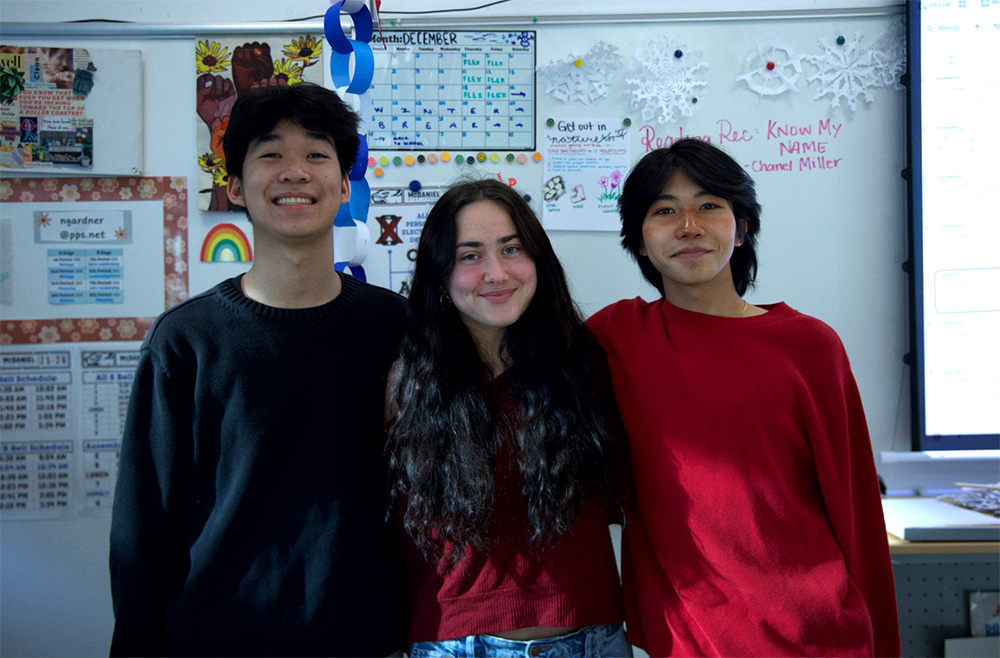
Students from the senior leadership and illustration classes are ambitious to create a series of murals on the school campus that would represent the senior class of 2026 and future senior classes in succession.
A handful of senior leadership students came into government classes in September to talk about preliminary details, but the actual project must go through a long approval process in the school and the district before painting begins in the spring.
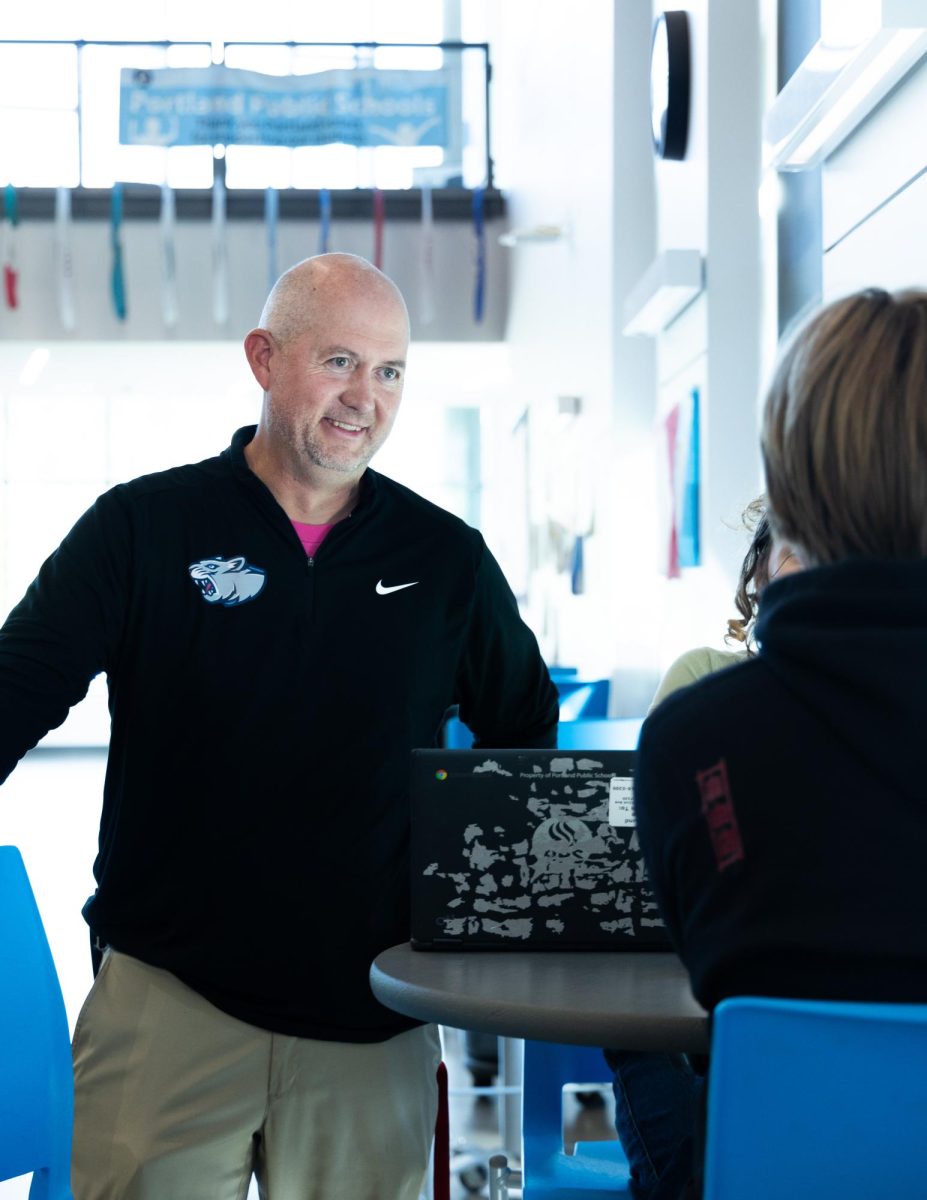
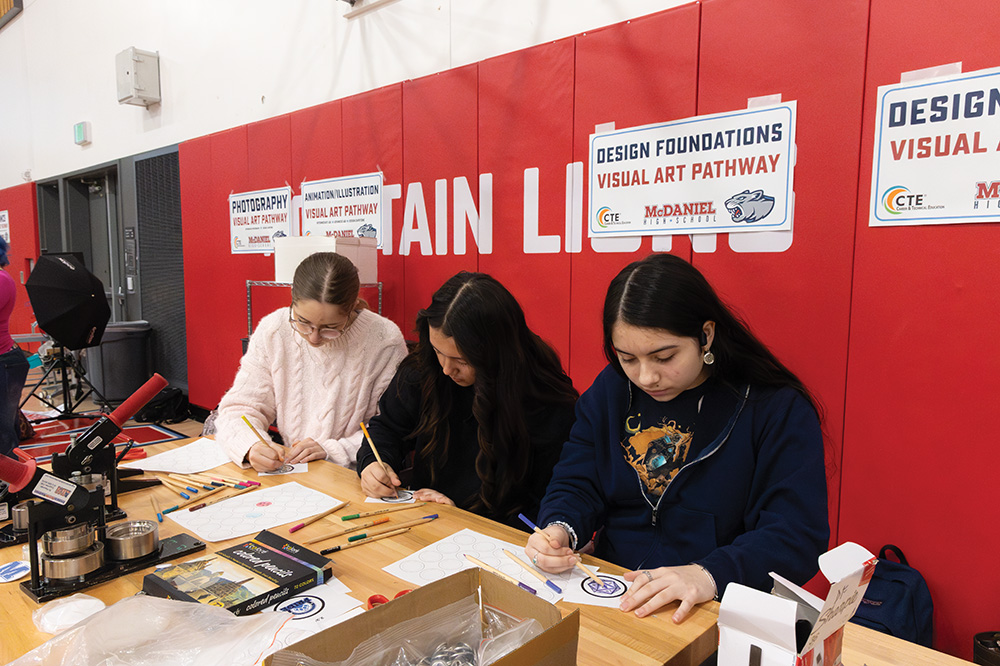
CTE art teacher Clinton Harpster is bringing the artist’s perspective to the project, which is a collaboration between the seniors in leadership and the Advanced Illustration class that Harpster teaches. While leadership is handling the logistics of making the mural a reality, the Advanced Illustration class is finding out what elements people would want in the mural.
“Leadership is not doing the research for us, that’s on my class as artists,” Harpster said. “They have to go out. They have to do the data collection like that’s part of being an artist.”
The art classes will have to create preliminary designs, which will be voted on, before more work can be done on the mural process. These mock-ups are on track to be finished by the end of February, Harpster said on Jan. 22.
“They do their final mock-up, their nicest rough draft. Bring it to me. We put it out into a Google vote,” Harpster said. “Or in the past, I’ve had them actually print out nice poster size versions of the mural, like where the site is.”
Those working on the project must still decide whether the mural will be inside the building or outside. The approval process looks different depending on which route they need to take.
“If we do it inside, that has to be approved by just [Principal] Skyles,” senior co-president Clara Gordon said, “and if it’s outside, then we have to get it approved by the city.”
As of Dec. 5, Skyles is “on board with” the mural going on the outside wall facing the lower athletic parking lot, according to Gordon. In that location, there will be enough space for 17-years-worth of mural space.
Now the only people left to approve the mural location are the PPS school board.
“I’m thinking that’s the main one [left],” Gordon said.
The next question is how students will be involved in the process. One method of how each student would contribute was having each student’s thumbprint filling in the mural.
“Since we’re really big on spirit, the theme would be spirit, and then we’d have a student section drawn out, and people would put their thumbprints as their silhouette,” arts commissioner Leo Chookan said.
Chookan is one of the students acting as a sort of mediator between the art and leadership sides of the project, as a member of both.
Another method described by Gordon was having a paint-by-number style mural with
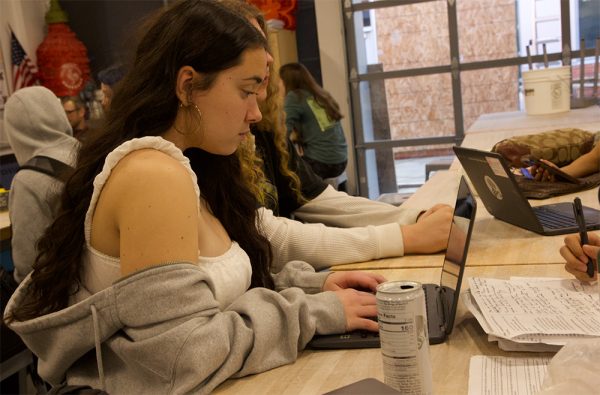
each student being assigned a number to paint.
“Once we give [the Advanced Illustration class] the [final] design, they’ll sketch out and mark up where we’re going to draw, and then label it and put it in numbers,” she said. “Maybe you’re number 62, and you’ll get a cup that’s the color red…and then you’ll paint those spots.”
The project will culminate in a painting day where all the seniors will leave their mark. The questions of how many students would be working at a time and when in the year the painting event would be answered differently by the art and leadership side.
The leadership term envisioned finishing the project before spring break, Gordon said, and letting the whole senior class out at once and completing it in a day, making it a whole senior event. The main problem with this approach is that, according to Gordon, “senior hours are very specific,” and letting everyone out of class means that there is missed instructional time counting towards graduation.
Harpster predicted that painting would start by the end of April. He added that he wanted the painting process to be in smaller groups, likely one class period at a time over the course of a few days.
Most importantly, the mural would leave a lasting legacy of the students here, something to look back on positively. Harpster commented on this, saying that art that people love “sticks with” them.
“There are [alumni] that I really hope, see that mural when they come back…and think, ‘Oh, I really helped with that,’” he said.